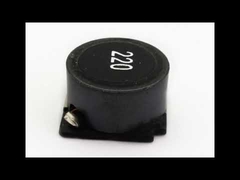
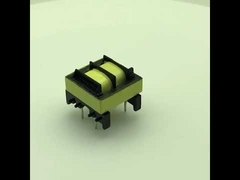
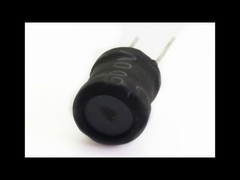
T4031 Signal Transformer ISDN 2B1Q 4B3T

Small Signal Transformer
December 26, 2025
Category Connection: Small Signal Transformer
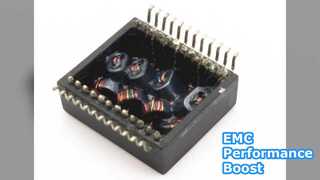
Brief: See the solution in real use and note how it behaves under normal conditions. This video provides a detailed demonstration of the T4031 Signal Isolation Transformer, showcasing its application in 2B1Q and 4B3T coding systems. You will learn how this compact, surface-mount component meets critical industry standards for ISDN U-interface applications.
Related Product Features:
  • Designed for applications using 2B1Q and 4B3T coding schemes.
  • Compatible with leading transceiver ICs for seamless integration.
  • Meets ANSI T1.601-1992 and ETSI ETR 080 standards for longitudinal balance, linearity, and return loss.
  • Features a small, compact surface-mount package for space-constrained designs.
  • Provides a minimum isolation voltage of 1500 Vrms for enhanced safety.
  • Available in multiple part numbers with specific turns ratios and electrical characteristics.
  • Offers excellent return loss and longitudinal balance performance across specified frequency ranges.
  • Suitable for 100Base-T network applications requiring signal isolation.
FAQs:
  • What coding schemes is the T4031 Signal Transformer designed for?
    The T4031 Signal Transformer is specifically designed for applications using 2B1Q and 4B3T coding schemes, which are commonly used in ISDN U-interface systems.
  • What industry standards does this transformer comply with?
    It meets ANSI T1.601-1992 and ETSI ETR 080 standards for critical parameters including longitudinal balance, linearity, and return loss, ensuring reliable performance in compliant systems.
  • What is the isolation voltage rating of the T4031 transformer?
    The T4031 transformer provides a minimum isolation voltage of 1500 Vrms, offering enhanced safety and signal integrity in your circuit designs.
  • Is the T4031 available in different variants?
    Yes, multiple part numbers are available (such as T4031, T4032, T4033, T4043, T4067) with variations in turns ratio, inductance, and DC resistance to suit different application requirements.